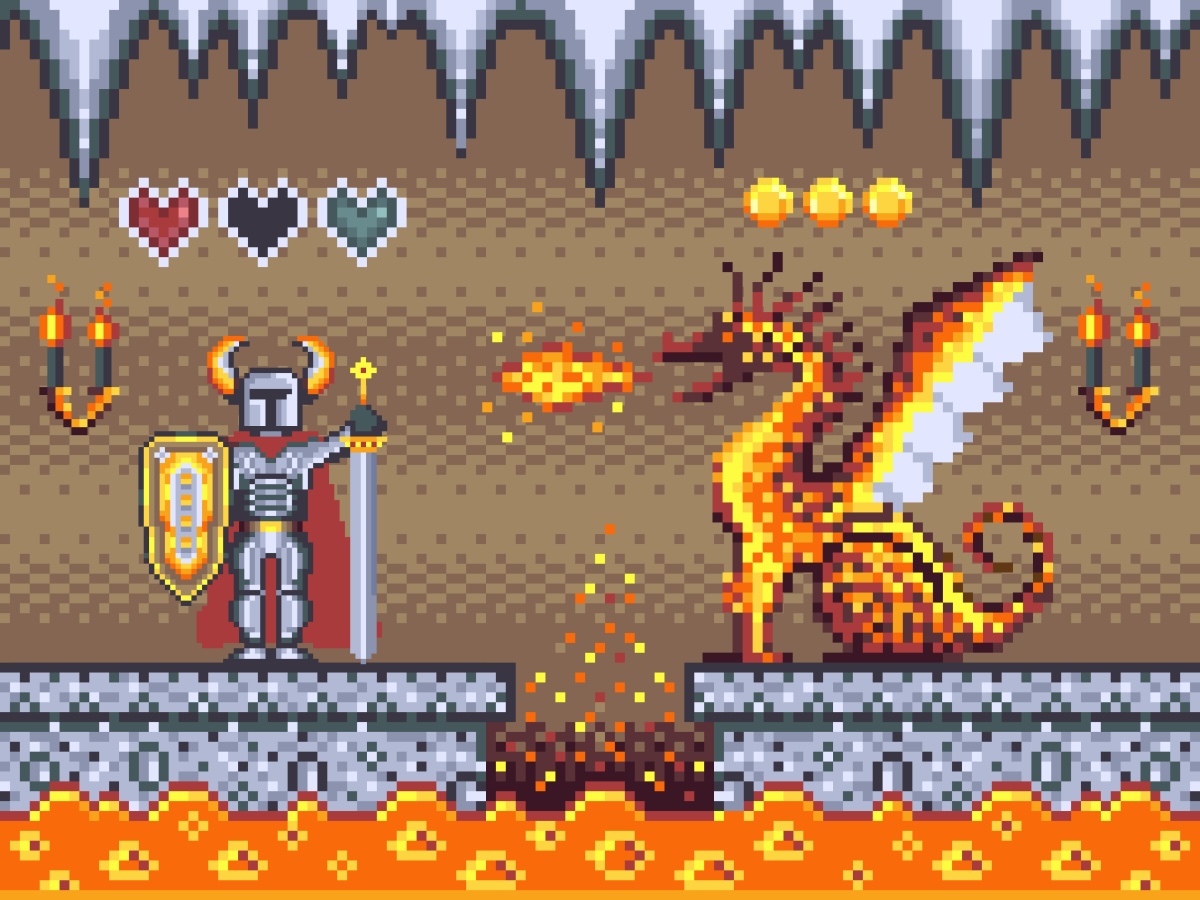
There is a specific kind of exhaustion that comes from staring at a game engine at 2 AM. For years, my development journey was a cycle of enthusiastic starts and quiet failures. It always began the same way: watching a motivational Udemy tutorial, opening Godot with big dreams, and then, three weeks later, abandoning the project because a movement script refused to compile.
The problem, I eventually realized, was that I wasn't just trying to "make a game." I was attempting to work three full-time jobs simultaneously.
- I was learning Pixel Art and Clip Studio, trying to be the Artist.
- I was learning GDScript and engine architecture, trying to be the Engineer.
- And I was trying to figure out mechanics, balance, and level layouts, trying to be the Game Designer.
The drain wasn't just the coding; it was the context switching. The moment I had to put down my stylus (Artist) to debug a script (Engineer), I completely lost the thread of what made the level fun (Designer). It felt less like a creative outlet and more like I was failing at three different careers at once.
The Shift to "Vibe Coding"
Everything changed when I stopped trying to be a solitary engineer and started treating AI as a technical co-founder. I began messing around with Google AI Studio, and we developed a workflow we now call Vibe Coding.
The philosophy is simple: Focus entirely on the creative flow—the "vibe"—and let the machine handle the syntax.
This shift unlocked a new way of working. I don't even create all the graphics by hand anymore. Instead of laboring over every pixel, I often use code to generate the art itself. I can tell the AI to write Three.js or SVG logic to render the shapes I see in my head, instantly translating an idea into a visual reality without opening a drawing program.
The "One-Minute" Prototype
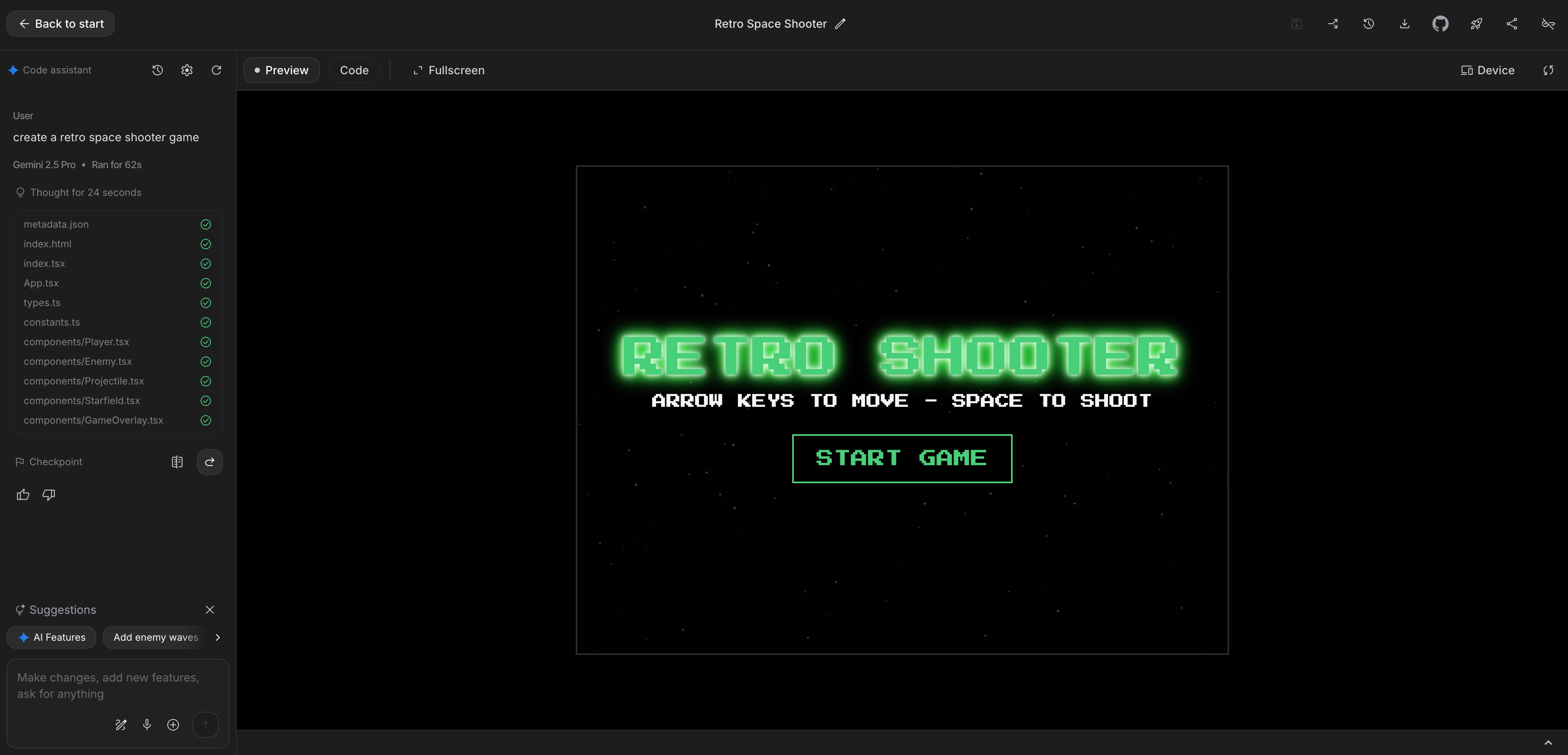
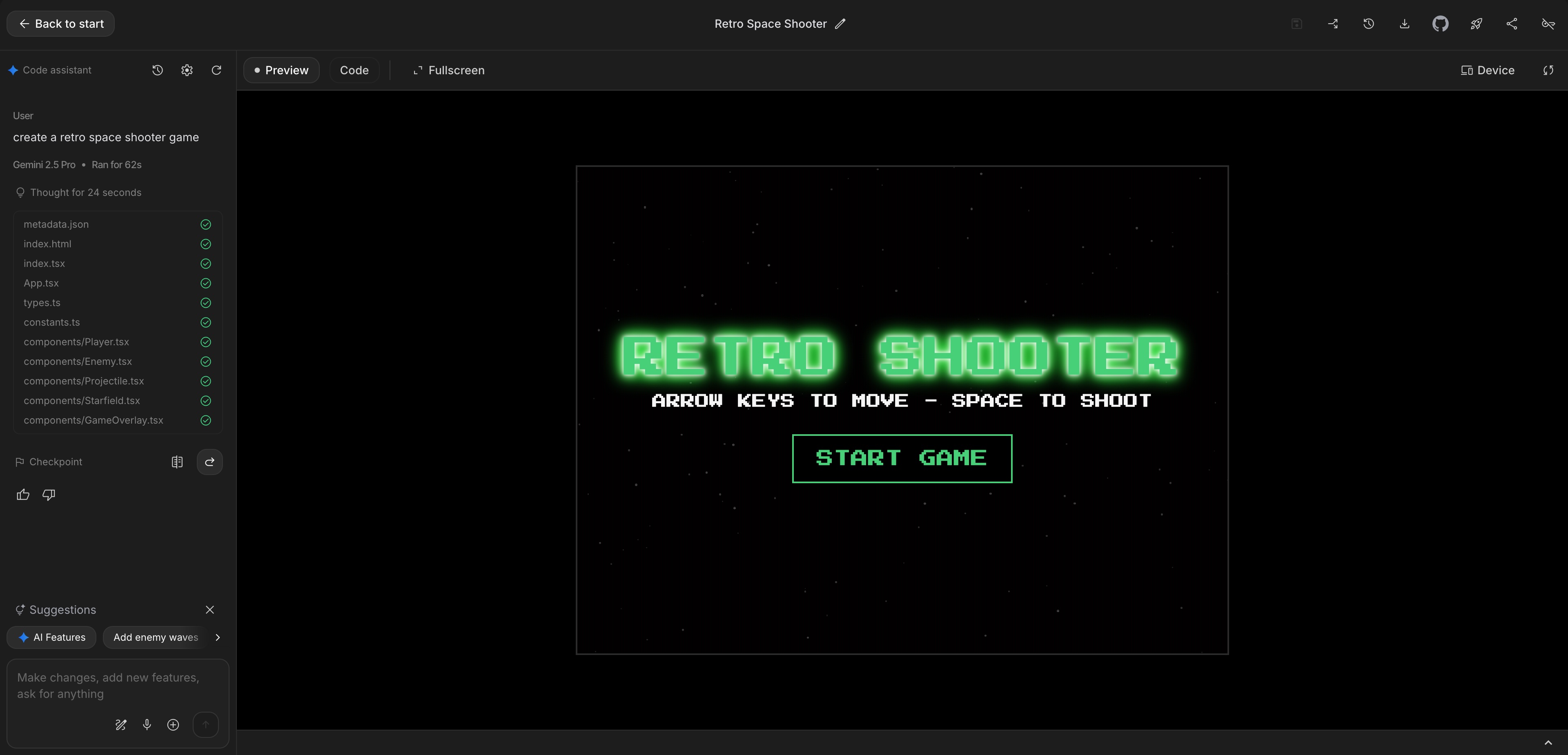
To illustrate just how fast this changes the dynamic, I ran a test recently. I didn't plan a database, I didn't set up a project folder, and I didn't worry about physics engines. I simply typed six words:
"create a retro space shooter game"

Sixty seconds later, the AI had generated the entire file structure—HTML, TypeScript, and the game logic. I clicked run, and I had a playable base.

Was it a masterpiece? No. But it was working.
From there, the process wasn't about writing loops or arrays; it was about Directing. I could sit back and say, "Add a triple-shot powerup," or "Make the enemies swoop in sine wave patterns." It felt like molding clay rather than building a bridge. I wasn't fighting the engine; I was playing with it.
The Results: 5 Games in 6 Months
The biggest difference isn't that the games are fancier—it's that they actually exist. The workflow is so intuitive that it’s contagious.
My wife has always loved games. She always had ideas for them, but she never even considered making one because the software barrier felt insurmountable. She has no background in tech and zero interest in learning to code.
But when I showed her what was possible with Vibe Coding, she jumped right in. A day later, I heard her typing away late at night, chipping away at her own project without needing any assistance from me. It unlocked something she didn't know she could do.
Using this method, she has already built and shipped two games of her own: Tiny Ocean Tank and Frog Pond Frenzy.
In total, we’ve made five games in the last six months. Compare that to the previous few years of struggle where I barely finished a single tutorial project.
Honest Truth: Perfection vs. Done
I want to be real about this: The games we make aren't complex Metroidvanias or polished RPGs. To be honest, I haven't even figured out how to use Vibe Coding to make a proper platformer yet—getting the physics tight is a challenge I'm saving for another day.
But the games we are making are playable. They are fun. And most importantly, they are finished.
For a long time, I let the fear of not being a "real" programmer stop me from releasing anything. I thought if I couldn't write a custom physics engine from scratch, I didn't deserve to be a dev. Vibe Coding helped me get over that ego. It taught me to care more about the player's experience than the elegance of the backend.
I still have massive respect for traditional coders—the wizards who understand memory management and architect complex systems. The industry stands on their shoulders. But I had to admit to myself that I am not one of them. I don't have the patience to debug for days. I just want to make things move on the screen.
If you have ideas burning a hole in your notebook but the technical wall is stopping you, don't force yourself to love the grind. Just find a way to skip it.